Dr. Hans Overgaard
Principal Investigator, WP7 lead
Dr. Hans Overgaard
"My personal scientific goal in this project is to get a better understanding of spillover processes in Southeast Asia. We aim to develop a viable pandemic preparedness and prevention strategy for the future that may be transferred to other similar settings. As the project manager of PANDASIA it is very important to me, not only to make this ambitious project successful, but also to learn from all the experts involved."
Mohamed Elsayed Abdelgawad Shelil
PANDASIA Project Manager, Public Health Expert
Mohamed Elsayed Abdelgawad Shelil
Dr. Rebecca Brown
Researcher
Dr. Rebecca Brown
"I am excited to be part of the multi-disciplinary PANDASIA team and hope to learn from the diverse skill set on how to understand and prepare for novel future zoonotic viruses of pandemic potential. In PANDASIA, my main focus is on invertebrate sampling for iDNA and Xenosurveillance of novel viruses in wild and domestic animal hosts. I'm looking forward to contributing my experience in vector studies to investigate the role of mosquitoes in the spillover of zoonotic viruses in Thailand, and how this is shaped by habitat and the availability of suitable vertebrate hosts."
Prof. Dr. Joacim Rockloev
Mathematical Modelling Expert, WP5 Lead

Prof. Dr. Joacim Rockloev
"My goal for the PANDASIA project is to identify relationships in environment, climate and spill over risks."
Dr. Marina Treskova
Postdoc Fellow
Dr. Marina Treskova
Prof. Dr. Till Bärnighausen
Intervention Science and Global health Expert

Prof. Dr. Till Bärnighausen
Dr. Kate Bärnighausen
Social Scientist
Dr. Kate Bärnighausen
Dr. Jerome Baron
Epidemiologist
Dr. Jerome Baron
Dr. Veronika Halász
Networking Expert
Dr. Veronika Halász
"Me and my team want to create and develop interventions for social prevention of pandemics. My personal goal as a mathematician is to come up with network models for information and infection transmission and spill over risks."
Department of Wildlife Diseases
Prof. Dr. Alex Greenwood
Wildlife Veterinary Public Health Expert

Prof. Dr. Alex Greenwood
"My goal is that we will start to avoid pandemics by acting – not by reacting. As the last pandemic has shown, we are ill-prepared for such global, threatening events. It is our goal together with my team to detect new emerging viruses among wildlife and strengthen and develop interdisciplinary networks with ambitious project partners."
Science Management
Cora Knoblauch
Communication Specialist

Cora Knoblauch
"Excellent research needs excellent communication, internally and externally. In a transdisciplinary research project like Pandasia, communication across research disciplines and across countries and cultures requires multiple channels and sensitivity. With all my experience and knowledge, I would like to help Pandasia not only communicate successfully with the public, but also ensure that everyone involved is in a fruitful and lively exchange."
Dr. Doreen Montag
Policy Analysis and Global Health Expert
Dr. Doreen Montag
"My focus in this project is to understand the role of policies and diverse stakeholders in the viral zoonotic spill over risk scenario. For me it is important to rethink our/human relationship to other species and ecosystems to prevent future spillovers. I want to strengthen and establish international collaboration and learn about Thai sociocultural, sociopolitics and historical environmental context."
Vidhya Sasitharan
Global and Public Health Researcher
Vidhya Sasitharan
"My goal for PANDASIA is to engage with and empower stakeholders to understand their role in zoonotic spillover risk from a one-health perspective, whilst working with and learning from an international multidisciplinary team."
Prof. Dr. Alongkorn Amonsin
Veterinary Public Health Expert, WP1 lead
Prof. Dr. Alongkorn Amonsin
"My primary focus within this project revolves around the realm of Transdisciplinary Research in Practices. Forging research networks and nurturing the next generation of researchers are particularly important to me."
Dr. Kanokwan Suwannarong
Epidemiologist, Social Scientist, and Senior Researcher
Dr. Kanokwan Suwannarong
"Research is a formidable instrument as well as an opportunity to amass invaluable insights that can profoundly enhance outbreak prevention measures. SUPA71 has years of experience in the collection of data from at-risk communities, documentation, and publication of relevant reports that capture people’s mindsets, attitudes, and practices. Such reports, with strategic recommendations, have been instrumental in guiding local government units towards formulating policies to address the issues of human-animal interactions. As an executive officer of SUPA71, I humbly extend the talents of our Team to support PANDASIA’s social research and communication. It is our hope to make substantial contribution towards achieving the project’s overarching goal and objectives."
Dr. Supassama Chaiyawong
Public Health Veterinarian, Postdoc Fellow

Dr. Supassama Chaiyawong
"I’m interested in studying the potential of zoonotic diseases to cause new pandemics – an interest that aligns perfectly with the objectives of the PANDASIA project. I am delighted to be a part of this project and fully committed to its success. I will diligently contribute my efforts towards the achievement of our project goals."
Dr. Chanakarn Nasamran
Veterinarian, Ph.D. Student

Dr. Chanakarn Nasamran
"I have a strong interest in zoonotic diseases, and I am delighted to be a part of the esteemed PANDASIA team."
Kannika Thammasutti
Ph.D. Student
Kannika Thammasutti
"The PANDASIA project holds immense importance as it strives to identify potential risks of new pandemics and zoonotic spillovers. By doing so, it aims to develop improved preventive measures for the benefit of our society, encompassing both humans and animals. I am genuinely delighted to be part of the PANDASIA team and fully committed to working diligently and contributing my best to the project."
Asst. Dr. Patcharin Lapanun
WP1 Lead, Phase 2

Asst. Dr. Patcharin Lapanun
"The focus of my team and me in this project is twofold. First, we aim to strengthen transdisciplinary research collaborations by integrating social science expertise to better understand zoonotic spillover risks and inform preventive strategies, while fostering international partnerships for knowledge exchange with fellow researchers. Second, in collaboration with research teams from various institutions, we seek to develop practical mechanisms and tools to prevent and manage zoonotic spillover and pandemics through engagement with local communities in Thailand, using human-centered and co-creation approaches.?
Dr. Monchai Phongsiri
Public Health Veterinarian, Postdoc Fellow
Dr. Monchai Phongsiri
"A healthy relationship between humans, animals, and the environment not only prevents the risk of zoonotic disease transmission but also contributes to a happier global society."
Mrs. Sasithorn Chaiphonngam
Veterinarian, Ph.D. Student
Mrs. Sasithorn Chaiphonngam
“A Field Manager plays an important role in ensuring that project activities in the field are implemented effectively and according to the project plan. The position involves coordinating field teams, managing operations, and communicating with local stakeholders. Effective field management helps ensure that project objectives are achieved efficiently and that activities respond appropriately to the needs of the community and project partners.”
Dr. Henrik Sjodin
Mathematical Modelling Expert, WP4 Lead

Dr. Henrik Sjodin
"My personal goals in this collaborative research project are centered around mitigating the risks of zoonotic spillover by focusing on three key areas. Firstly, I hope to contribute to a mechanistic understanding of the ecological, evolutionary and epidemiological spillover-processes and pathways. By improving our understanding of these processes, we can identify mechanisms that can be targeted to reduce spillover risk and to develop effective strategies for preventing future spillover events. Secondly, I am interested in investigating the potential of nature-based and socio-ecological solutions to spillover risk. Finally, I am excited to be engaging in transdisciplinary work to push beyond the current state-of-the-art in zoonotic spillover research by collaborating across disciplines and bringing together diverse perspectives."
Junwen Guo
Mathematical Modelling Expert

Junwen Guo
Dr. Erin Stafford
Postdoctoral Researcher

Dr. Erin Stafford
"As part of the mathematical modeling team for PANDASIA, I hope to help further our understanding of zoonotic spillover risks and pathways."
Prof. Dr. Chamsai Pientong
Senior Virologist, WP3 lead

Prof. Dr. Chamsai Pientong
"My team and I will undertake the crucial task of verifying non-invasive sample collection for emerging viral surveillance. We will survey the circulation of viruses within the potential transmission pathways of emerging infectious diseases (EIDs) hotspots, as well as diligently identify and characterize spillover viruses with emerging potential. We place great importance on fostering interdisciplinary collaborations, disseminating vital information, and enhancing our understanding of viral-infected diseases within EIDs hotspots. Our aim is to engage with stakeholders at every level to collectively improve the management of such diseases."
Prof. Dr. Tipaya Ekalaksanan
Virologist
Prof. Dr. Tipaya Ekalaksanan
Assoc. Prof. Dr. Supranee Phantanawiboon
Virologist
Assoc. Prof. Dr. Supranee Phantanawiboon
Asst. Prof. Dr. Sririnart Aromseree
Virologist
Asst. Prof. Dr. Sririnart Aromseree
Dr. Thawaree Nukpook
Virologist
Dr. Thawaree Nukpook
"I have expertise in virology and HPV-associated carcinogenesis, with proficiency in molecular and cell culture techniques, as well as cell line establishment and in vitro modeling, to study the mechanisms of cancer development caused by viral infections.
My focus in The PANDASIA project revolves around the comprehensive survey and identification of viruses with zoonotic potential and gaining a better understanding of the spillover processes."
Dr. Sittichoke Ketkaeo
Bioinformatician

Dr. Sittichoke Ketkaeo
"I have expertise in Molecular Biology & Biotechnology, Bioinformatics, and Next-Generation Sequencing. My knowledge spans a broad range of Micro-molecular research fields, which specialize in modern molecular biology techniques, and have an in-depth understanding of genome editing approaches, whole genome analysis, bioinformatics, and metagenomic analysis."
Dr. Suwalak Chitcharoen
Bioinformatician
Dr. Suwalak Chitcharoen
"My research background is related to bioinformatic, multi-omic, and metagenomic analysis of microorganisms, especially viruses. Additionally, the function of non-coding regions in the genome is also my area of research interest."
Dr. Boripat Siriaroonrat
Wildlife and Environmental Health Expert, WP2 Lead
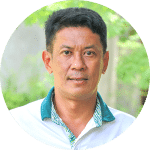
Dr. Boripat Siriaroonrat
"The focus for me and my team lies in strengthening research collaborations on biodiversity and health. My personal goal as an affiliated scientist is to demonstrate my team’s professional expertise and scientific acumen, ensuring significant contributions to the overall achievements of the project. I am eager to bring my expertise in wildlife ecology and health methods to bolster the project's work plan and to gain new technical knowledge and skills from working closely with fellow researchers."
Asst. Prof. Dr. Prateep Duengkae
Wildlife Ecologist, Senior Researcher
Asst. Prof. Dr. Prateep Duengkae
Our goal is to actively participate in spatial ecology, aiming to strengthen preparedness for future pandemics.
Asst. Prof. Dr. Kittipong Chaisiri
Parasitologist
Asst. Prof. Dr. Kittipong Chaisiri
"My main research expertise is biology of rodents and rodent-borne diseases (macro- and micro parasites) in Southeast Asia. Specifically, I am participating in this research project as a field researcher studying rodents and potential zoonotic diseases from the perspective of the hosts and parasite diversity in regarding to environmental changes."
Asst. Prof. Dr. Aingorn Chaiyes
Wildlife Ecologist

Asst. Prof. Dr. Aingorn Chaiyes
"My work broadly across the areas of wildlife biodiversity, biogeography, the interfaces between people, wildlife, and the environment, through a combination of ecological niche modeling ,remote sensing, geographic information system and field studies."
Asst. Prof. Dr. Supaphen Sripiboon
Veterinarian, Senior Researcher
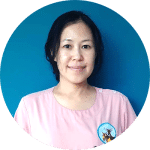
Asst. Prof. Dr. Supaphen Sripiboon
"I am delighted to be a part of the PANDASIA project. As a veterinarian and researcher with a profound interest in wildlife conservation, my expertise centers around the application of molecular diagnosis techniques intricately linked with the study of disease dynamics and transmission pathways. I look forward to actively engaging in the project's mission and collaborating with fellow experts to address these critical global issues."
Dr. Wanlaya Tipkantha
Zoo & Wildlife Veterinarian
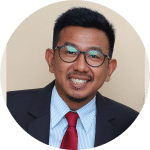
Dr. Wanlaya Tipkantha
"As a zoological vet, I am appreciate to be a part of PANDASIA project. It’s a great opportunity to learn and share our expertise with the team to gain more knowledge in wildlife-environmental health that would benefit creating better plans to save our planet's biodiversity."
Dr. Paisin Lekcharoen
Wildlife Epidemiologist
Dr. Paisin Lekcharoen
"In the age of the Anthropocene, profound shifts in ecological processes imperil the well-being of all life forms and the environment. As active members of the causative community, it falls upon us collectively to comprehend, forestall, and remedy these challenges. It is incumbent upon us to bequeath a more promising legacy of the world to future generations."
Dr. Waleemas Jairak
Wildlife Veterinary Epidemiologist
Dr. Waleemas Jairak
"In our changing world, animal and human disease surveillance is vital, particularly with human activities shaping nature in the Anthropocene era. I am glad to be a part of PANDASIA project and to put my effort into ongoing and constant surveillance to stay aware and protect our ecosystems."
Dr. Kanokwan Suwannarong
Senior Researcher, WP6 Lead

Dr. Kanokwan Suwannarong
"Research is a formidable instrument as well as an opportunity to amass invaluable insights that can profoundly enhance outbreak prevention measures. SUPA71 has years of experience in the collection of data from at-risk communities, documentation, and publication of relevant reports that capture people’s mindsets, attitudes, and practices. Such reports, with strategic recommendations, have been instrumental in guiding local government units towards formulating policies to address the issues of human-animal interactions. As an executive officer of SUPA71, I humbly extend the talents of our Team to support PANDASIA’s social research and communication. It is our hope to make substantial contribution towards achieving the project’s overarching goal and objectives."
Glid Udomsappong
WP6 Team Member
Glid Udomsappong
Dr. Cecile Lantican
Social Behavioral Change Communication (SBCC) Expert
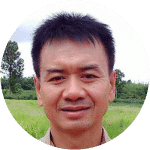
Dr. Cecile Lantican
"I strongly believe that emerging and re-emerging infectious diseases in the future need to be tackled by helping communities at risk to shift to desired behaviors through effective behavior change communication strategies that are practical and doable for them. Many studies have shown that behavior change communication can be applied in clinical settings and public health in the prevention of communicable and noncommunicable diseases. Hence, future outbreaks from emerging and re-emerging infectious diseases need to be tackled with behavioral immunity. Health education evolves to a desired behavior change within a conducive environment and within the culture and context of the identified audience. PANDASIA explores through evidence and knowledge base to educate and influence policy decision makers and positively shift individual behavior to prepare for future pandemics from infectious diseases. Given my experience and capacity on social and behavior change..."
Thanomsin Ponlap
Senior Social Scientist

Thanomsin Ponlap
"I greatly appreciate the opportunity to be a valued team member of PANDASIA and to work in an interdisciplinary research team to study Thailand. Multi-sector perspectives are crucial for a holistic understanding of new pandemics and zoonotic spillovers in our study site. Moreover, the insights and lessons learned from our research can be shared and applied to benefit other countries."
Kannika Thammasutti
Social Scientist
Kannika Thammasutti
"The PANDASIA project holds immense importance as it strives to identify potential risks of new pandemics and zoonotic spillovers. By doing so, it aims to develop improved preventive measures for the benefit of our society, encompassing both humans and animals. I am genuinely delighted to be part of the PANDASIA team and fully committed to working diligently and contributing my best to the project."
Worakamon Thongkan
Social media officer
Worakamon Thongkan
"The PANDASIA project is "NEW". It signifies a new beginning, heralding new findings and ushering new changes. I truly enjoy being a part of the PANDASIA team, and I commit to leveraging my skills and experiences to drive the project towards success."
Bagus Pradana
Social Media and Communications Officer
Bagus Pradana
"With my background in social sciences and experience in social media, communications, and journalism, I aim to contribute to preventing the spread of future pandemics by utilizing my expertise. I am very happy to join the PANDASIA team."
Prof. Dr. Tiago Oliveira
Full Professor at NOVA IMS, Behavioural studies
Prof. Dr. Tiago Oliveira
I am thrilled to participate in the PANDASIA project, where we will apply our expertise to identify and quantify the key determinants of citizen engagement in preventive behaviours.
Prof. Dr. Ricardo Martins
Professor of the Practice and Researcher at NOVA IMS, Behavioural studies
Prof. Dr. Ricardo Martins
Honored to be a part of the PANDASIA project and apply our expertise to investigate citizen behaviour and engagement in
prevention interventions.
Asst. Prof. Dr. Mijail Naranjo
Assistant Professor at NOVA IMS, Behavioural studies

Asst. Prof. Dr. Mijail Naranjo
I am excited to join the PANDASIA project and bring my expertise to the team's mission. By understanding the complexities of human-human and human-animal interactions and leveraging data, we can develop innovative strategies to predict and prevent zoonotic spillovers. Together, our efforts will create a safer, more prepared world for future generations.
Dr. Diego Costa Pinto
Associate Dean for Research at NOVA IMS, Behavioural studies
Dr. Diego Costa Pinto
PANDASIA is a great opportunity to generate behavioral insights and community empowerment to enhance health literacy
Dr. Sara Dias
Researcher
Dr. Sara Dias
Dr. Rafael Wagner
Researcher
Dr. Rafael Wagner
Dr. Inês Veiga
Researcher, Behavioural studies

Dr. Inês Veiga
I am eager to contribute to the PANDASIA project, where our collective expertise will drive impactful behavioural insights and empower communities. By leveraging data-driven strategies, we will enhance health literacy, prevent zoonotic spillovers, and promote protective behaviours, ensuring a safer and healthier future for all.