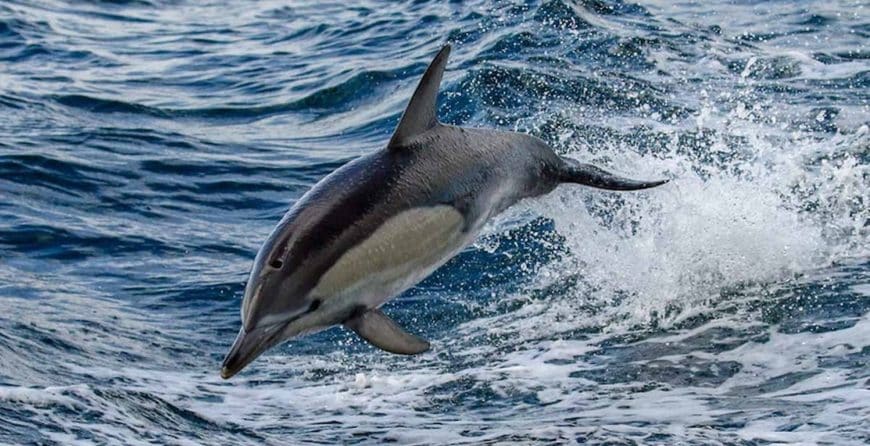
First H5N1 bird flu detection confirmed in Australian dolphin
A dead dolphin found at Goolwa on South Australia’s Fleurieu Peninsula has returned a positive test result for H5N1 bird flu, according to state authorities.
SA’s Department of Primary Industries and Regions (PIRSA) said the detection in dolphins was a “new development in Australia”, though several cases have been reported in other countries.
The state’s chief veterinary officer Dr Skye Fruean said it was expected the dolphin had “eaten a bird or interacted closely with a wild bird”.
“We know that dolphins are highly susceptible, which means they are at risk,” she said.
Dr Fruean said there were few reports globally because infected dolphins were rarely found on shorelines.
The detection followed a positive result in a red fox found in Adelaide’s north-west earlier this week.
Concern over bird flu’s spill into local dolphins
Cetacean and whale researcher Dr Mike Bossley is concerned at how quickly a dolphin has contracted the disease.
“To have one here so soon is very shocking for me and very worrying,” he said.
“It’s spreading to other species than birds really, really quickly. There’s not much we can do about it. It’s terrible.”
Dr Bossley said dolphin protection in areas like the Port River would be challenged by proximity to wetlands like the city’s nearby international bird sanctuary, and the tendency of the two species to overlap in their feeding activities.
“[Dolphins] often feed in conjunction with birds,” said Dr Bossley.
“They follow the birds around because the birds can see the fish better than they can, from the air. So there’s some overlap.”
Faster tests amid expectation of more events
More than 350 positive bird flu events have been reported in Australia, with South Australia sitting at a total of 249 following the confirmation of 46 overnight.
PIRSA said the larger-than-usual number of confirmed events overnight was due to a new provision allowing the state to consider its positive detections as official without additional verification by the CSIRO’s national lab in Geelong, as was previously the case.
Dr Fruean said that it would mean detections would be confirmed sooner.
“We’ve been conducting that testing here at our lab in Adelaide, in parallel to the testing that has been happening at ACDP, which means we’re both testing the same samples and we’re consistently getting the same results,” she said.
“That national lab is really there to be doing the more complex cases where we can’t be sure of own results, or they need to do the more detailed analysis.”
So far, most events have been concentrated on Australian coastlines, but detections are expected to increase as the virus circulates between bird and animal populations.
The Australian Antarctic Division is preparing to extract its researchers from Macquarie Island to avoid psychological risks posed by potential mass wildlife deaths on the continent.
Tasmania’s Parks and Wildlife Service (PWS) this afternoon confirmed about 100 dead penguins had been found at Stokes Point on the southern tip of King Island.
According to PWS, the birds were considered unsuitable for H5 bird flu testing due to their decayed condition. Injuries were also found on some birds.
As a precautionary measure, PWS said it would undertake feral cat control on the island to try and reduce the spread of any bird flu, should that have been the cause of the penguin deaths.
Scavenging animals have the potential to spread H5N1 if they consume infected animals or move carcasses within the environment.
If you see a sick or dead bird:
- Do not touch it.
- Take note of the location and, if possible, take photos.
- Report it to the Emergency Animal Disease Hotline: 1800 675 888.
H5 situation in Australia
Additional information from the Australian Government Department of Agriculture, Fisheries and Forestry: H5 bird flu updates
The detection in the dolphin comes amid the ongoing spread of H5 avian influenza in Australian wildlife, with infections now also being detected in mammalian species.
On 23 August 2026, CSIRO’s Australian Centre for Disease Preparedness (ACDP) confirmed H5 high pathogenicity avian influenza in a long-nosed fur seal found at Beachport, South Australia. This was the first detection of H5 bird flu in a mammal in Australia.
On 28 August, H5 was confirmed in a red fox found at Osborne in metropolitan Adelaide. The fox was the third mammalian species in Australia in which H5 bird flu had been detected and represented the first detection in a terrestrial mammal.
However, Australia’s Chief Veterinary Officer stated that there is currently no evidence of mammal-to-mammal transmission associated with H5 bird flu in Australia. As observed overseas, detections in wild terrestrial carnivores such as red foxes are believed to represent isolated spillover events from birds.
Although the detection of H5 bird flu in mammals is concerning, Australian authorities noted that it was not unexpected in areas where high levels of infection are occurring in wild birds. H5 bird flu has not been detected in Australian poultry or agricultural production systems, and the risk to human health remains low.
Source: Australian Government Department of Agriculture, Fisheries and Forestry — H5 bird flu updates
Australian Government: https://www.agriculture.gov.au/about/news/H5-bird-flu-updates
SOURCE: https://www.abc.net.au/news/2026-08-28/sa-detects-h5n1-bird-flu-in-goolwa-dolphin/107090806
Image credit: South Coast Cetaceans